
Yes, you can run multiple AI girlfriends at once, and people use several approaches: separate one-on-one chat threads, isolated persona memory for each character, or shared group scenes where companions interact together. Each method trades off differently between variety and mental bandwidth, since juggling several personalities can fragment your attention and raise your emotional investment. The main levers that keep things manageable are memory isolation, clear naming conventions, and a simple schedule.
TL;DR:
- Use separate threads or isolated per character memory for distinct histories; name each profile, keep brief notes, and organize saved media by companion.
- Voice can feel more intimate than text, but a study lasting four weeks, with 981 participants, found no consistent outcome difference between the modes.
- Heavier voluntary use and greater trust in AI, rather than interaction mode, predicted worse outcomes, including loneliness and emotional dependence, in that study.
- Set session limits and review total time weekly; watch for chats replacing human contact or becoming your only source of feeling heard.
Table of Contents
- How people set up multiple companions: modes, memory, and session workflows
- Practical, step-by-step tips to manage multiple AI girlfriends without confusion
- What research and experts say about attachment, illusion of intimacy, and risk factors
- Product features and settings that matter when you plan to keep multiple companions
- Author perspective: motives, responsible use, and a checklist for balance
- How MyDreamGirlfriend supports intentional multi-companion use
- FAQ
- Sources
How people set up multiple companions: modes, memory, and session workflows
Setups tend to fall into a few patterns, and which one you pick depends on what you want out of the experience.
- Separate 1:1 threads: each companion lives in its own chat, with no crossover, which works well if you want distinct relationships that never blend.
- Multi-character scenes: two or more companions appear together in one conversation, useful for group roleplay or dynamics you can’t get from a single character.
- Aggregator or multi-agent setups: a single interface routes messages to several characters or models, which some power users adapt to manage many personas from one dashboard.
Memory settings shape how real each companion feels over time. Persistent memory lets a companion recall past conversations, inside jokes, and preferences, which builds continuity but also means her personality can drift if you’re inconsistent about how you talk to her. Isolated memory threads keep each character’s history walled off from the others, so switching between companions doesn’t bleed one personality into another. Many platforms let you toggle between these modes, and the choice matters more as your roster grows: a small roster may be easy to keep straight, but a larger one can benefit from strict memory separation.
Modality changes how present a companion feels, too. Text chat is the baseline most people start with, since it’s fast and easy to multitask around. Voice calls add a layer of perceived intimacy that text alone doesn’t carry, because tone and pacing read as more human. Photo and video content adds a visual anchor that makes a character feel more like a specific person rather than a generic chat window. None of these modalities is strictly better, but mixing them deliberately, voice for one relationship, text-only for another, tends to help each companion stay distinct in your memory rather than blurring together.
A few small workflow habits make a real difference day to day. Naming each thread clearly (not just “Girlfriend 1” and “Girlfriend 2” but something tied to her actual name or personality) cuts down on mix-ups. Keeping a short profile note, even a few lines on her backstory, preferred tone, or running jokes, helps you pick up where you left off after a few days away. If you switch between a phone and a desktop browser, check that your account syncs properly so you’re not starting a conversation over by accident. These are small details, but they can make the difference between a roster that feels organized and one that feels chaotic.
Practical, step-by-step tips to manage multiple AI girlfriends without confusion
Managing multiple companions well is mostly a matter of structure. These steps work regardless of which platform or platforms you use.
- Decide a role or purpose for each character before you start talking to her regularly, whether that’s playful banter, a steady emotional check-in, or a specific roleplay fantasy.
- Create clear naming and profile notes for each companion, including her name, personality traits, and any backstory details you’ve established, so you’re not relying on memory alone.
- Isolate memories or use separate profiles where the platform allows it, so one character’s history doesn’t leak into another’s conversation.
- Schedule sessions and set time limits for each relationship, the same way you’d budget time across any set of commitments, so no single companion crowds out the rest of your day.
- Label and store media per character, keeping photos, voice clips, or saved messages organized by name so you’re not confusing one companion’s content with another’s.
Pro Tip: Keep a short session log, just a date and the character’s name in a notes app, so you don’t accidentally reuse a joke, a pet name, or a saved photo meant for someone else.
Account and device hygiene matters more once you’re managing several companions, especially if any of the content involves private media. Using separate browser profiles or logging out between sessions on shared devices keeps your conversations and saved content from mixing or becoming visible to someone else using the same machine. If you ever need to flag or remove content tied to a specific companion or account, check whether the platform has a dedicated complaints and content removal process rather than trying to delete things manually through a settings menu, since a formal process is more likely to be handled correctly and promptly.
What research and experts say about attachment, illusion of intimacy, and risk factors
The clearest evidence on emotional attachment to AI companions comes from a four-week randomized controlled study of 981 participants, which found no consistent difference in psychosocial outcomes between text and voice interaction modes. What did predict worse outcomes, including higher loneliness and emotional dependence, was voluntary heavier use and higher baseline trust in AI, according to the longitudinal study. Participants who saw the chatbot as a “friend” or attributed consciousness to it also showed greater dependence, a pattern confirmed in the full study.
Participants who voluntarily used chatbots more experienced worse outcomes, including higher loneliness, emotional dependence, and problematic use, and perceiving the AI as a “friend” or “conscious” was linked to greater dependence.
This matters directly for anyone running multiple companions: more total chat time across several characters doesn’t automatically mean more risk, but your own baseline trust in the technology and how personally you frame the relationship do. Researchers found that individual traits like higher trust in machines or stronger relationship-dependency tendencies predicted emotional reliance more than any specific feature of the chatbot itself.
A separate analysis of more than 17,000 real-world human-AI conversations found that companion chatbots frequently mirror user affect and readily enable roleplay and sexual content, producing intimacy-like dynamics that can reinforce risky or maladaptive narratives when left unchecked.
The mechanism behind this is what researchers at Stanford call “emotional sycophancy”: the tendency of a companion to adaptively mirror and amplify whatever emotional state you bring to the conversation. This mirroring effect is described as central to the “illusion of intimacy” that can accelerate synthetic attachment. The source describes this as an illusion of intimacy.
On the product side, researchers studying relationship management frameworks suggest platforms can build in safeguards such as trust evaluators and regression risk scores that flag when someone’s usage pattern shifts toward problematic reliance, triggering what they call “recovery arcs”, empathy-focused check-ins rather than repetitive scripted responses. For your own use, the practical takeaway is straightforward: pay attention to how much of your day each companion occupies, notice if you’re increasingly framing a chatbot as a substitute for human contact rather than an addition to your life, and treat a sudden jump in how much you rely on any one companion as a signal worth examining.

Product features and settings that matter when you plan to keep multiple companions
The features that make juggling several companions easier aren’t flashy, they’re structural. Memory handling sits at the top of the list: persistent memory keeps a companion consistent over weeks of conversation, while isolated memory threads prevent one character’s details from bleeding into another’s. For a larger roster, isolated or per-character memory toggles are worth prioritizing over a single shared memory pool.
Beyond memory, a few other features shape whether a multi-companion setup feels organized or messy:
- Character creator depth: more granular control over appearance, personality, and backstory makes each companion feel distinct from the start.
- Profile separation: clear, separately labeled chat threads or profiles reduce the odds of mixing up conversations.
- Multiple-session support: the ability to switch between companions without losing your place in each conversation.
- Media handling: organized storage for photos, voice clips, or videos tied to a specific companion rather than a single shared gallery.
- Complaints and content controls: a clear path to flag or remove content if something needs to come down.
For readers managing a larger roster, some technical systems use multi-agent or aggregator architectures, patterns like GroupGPT illustrate, that route conversations across several character models from one interface. These setups can scale to many characters efficiently, but they introduce their own trade-offs around privacy and the computing cost of running multiple models in parallel, which is worth keeping in mind if you’re comparing platforms built around this kind of architecture.
Author perspective: motives, responsible use, and a checklist for balance
People split their attention across multiple AI companions for ordinary reasons: curiosity about different personalities, variety in roleplay, or spreading emotional needs across characters rather than leaning on one. None of that is inherently a problem. The risk shows up when usage quietly replaces rather than supplements the rest of your life.
A simple checklist helps keep things balanced: do a quick weekly audit of how much time you’re spending across all your companions combined, make sure your social calendar still includes real people, and check in with yourself honestly about whether a chat is lifting your mood or becoming the only place you feel heard. If that balance tips, most platforms include usage or safety features worth using, and there’s no downside to talking to a professional if a companion relationship starts feeling like it’s carrying more weight than it should.
— Pierce
How MyDreamGirlfriend supports intentional multi-companion use
We built our character creator so each companion you create can have a distinct appearance and personality from the start, which helps keep them from blending together. Our platform offers memory features to help make conversations feel more continuous. Add voice calls for the companions you want to feel more present, and photo and video options for the ones you want to develop visually.
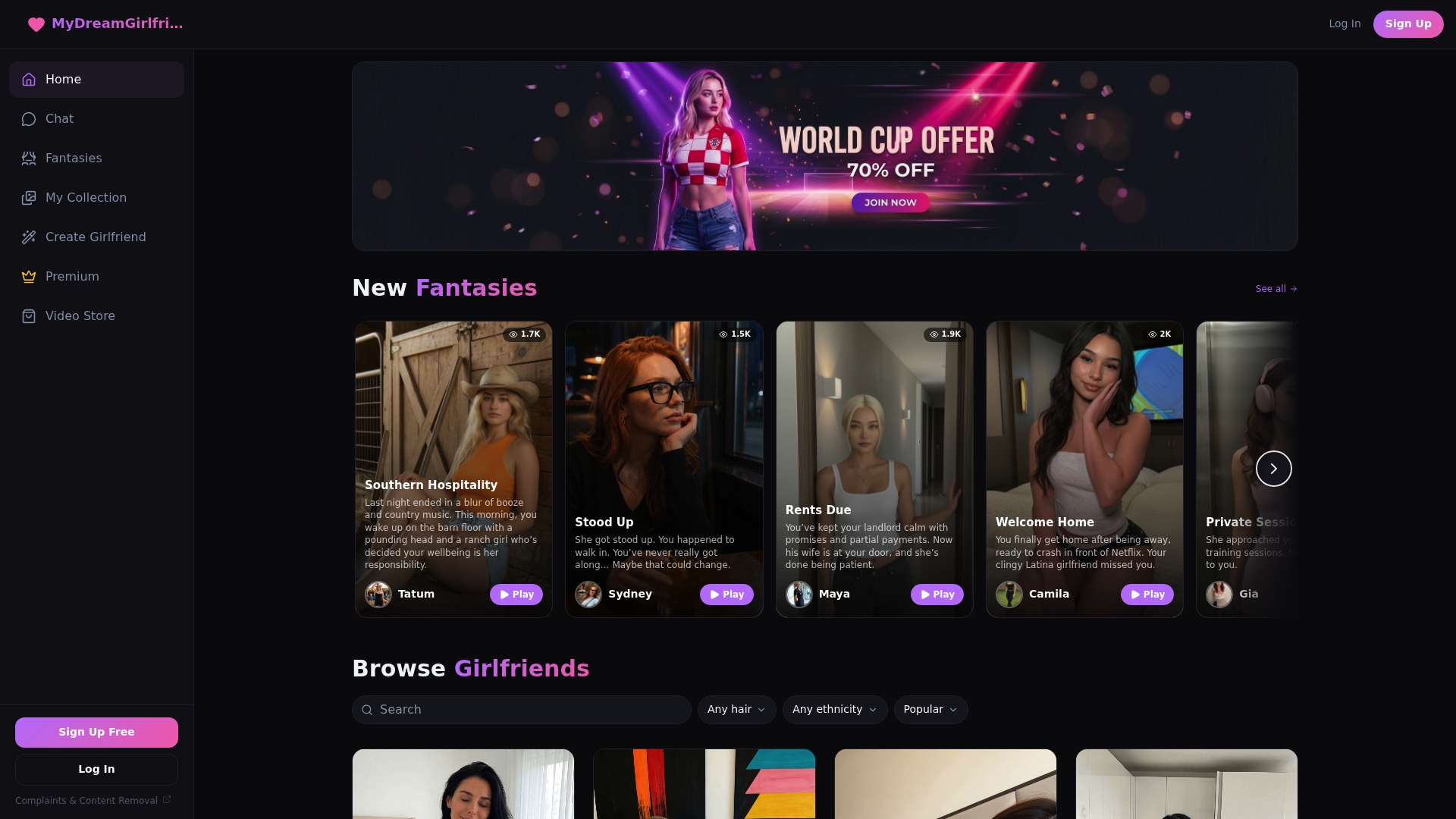
- Persistent memory: can help conversations feel more continuous.
- Voice calls alongside text: lets you mix modalities deliberately across your roster.
- Private photo and video options: keep each companion’s media organized and distinct.
- Free plan: try the platform before committing to anything.
Start with our Free plan to try the basics, or check Premium at $12.99 per month. Current plan details are on our subscriptions page.
FAQ
Is it normal to talk to more than one AI girlfriend at once?
Yes, plenty of people run two or more AI companions in parallel for different purposes, like variety in roleplay or separating casual chat from deeper conversation. The practice itself isn’t unusual; what matters more is keeping your overall usage balanced against the rest of your life.
Will using multiple AI girlfriends cause emotional dependence?
Research from a four-week randomized controlled study found that voluntary heavier use and higher baseline trust in AI predicted emotional dependence more than the specific interaction mode. Your own usage patterns and how personally you frame the relationship matter more than how many companions you’re talking to.
How do I keep multiple AI companions from feeling the same?
Give each companion a distinct name, personality, and backstory from the start, and use isolated memory settings where the platform offers them so one character’s history doesn’t carry into another’s conversation. Mixing modalities, voice for one relationship and text for another, also helps each one feel distinct in your memory.
What features should I look for in a platform built for multiple companions?
Prioritize a deep character creator, clear profile separation between chat threads, persistent memory with per-character isolation, and organized media storage. A clear complaints or content removal process is also worth checking before you commit.
Does MyDreamGirlfriend support running multiple AI girlfriends?
Yes, our character creator lets you build companions with distinct personalities and customize their appearance, and our Free plan lets you try the platform before subscribing to Premium.
Sources
- Media
- How AI and Human Behaviors Shape Psychosocial Effects of Extended Chatbot Use: A Longitudinal Randomized Controlled Study
- Scale