
Consent in AI roleplay works differently from consent between two people. The AI has no will of its own to protect, so the whole structure rests on you: what you choose to explore, the limits you set before a scene starts, and your freedom to stop it at any moment. This guide covers how to do that well, from opening a scene to ending it, plus the privacy and legal points that go with intimate chat.
TL;DR
- An AI character cannot consent the way a person does, so your consent is about you: your limits, your pacing and your right to pause or end a scene at any time.
- Set boundaries in plain language before a scene starts, restate them whenever the story drifts, and use a clear stop phrase.
- Intimate chat produces sensitive data. Treat what you share as private information and decide in advance what stays out of the conversation.
- Platforms for adults should disclose that the companion is artificial, and rules differ by country and state.
- On MyDreamGirlfriend, you shape the personality and the scenario yourself, so the experience starts from your preferences.
Table of Contents
- What consent means when the other side is an AI
- How to set boundaries before the scene starts
- A simple boundary toolkit you can use in any chat
- What to do when you change your mind
- Boundaries that apply between roleplay partners who are people
- Privacy is part of consent
- Adults only, and what the rules say
- Our perspective
- Build a companion around your limits
- A short pre-scene checklist
- FAQ
- Sources
What consent means when the other side is an AI
In human relationships, consent depends on autonomy, mutual understanding and the real ability to say no. An AI is not conscious and has no wants of its own. When a character says it wants something, that is generated language rather than a statement of desire.
That does not make roleplay pointless. Fiction has always involved characters who say things nobody literally means. A novel, a tabletop campaign and a fantasy chat all work because both sides know it is a story. The consent that matters here is yours, plus the clarity that it is fiction.
It helps to separate three layers:
- Your consent to the scenario. You choose the theme, the intensity and the direction.
- Your consent to the data. You decide what real-life details you hand over.
- The character’s “yes” and “no.” This is narrative. It can make a scene feel real, but it is writing, not a real choice by another being.
Keeping those layers straight is what lets you enjoy an immersive scene without confusion about what is actually happening.
Why a character that always agrees can feel odd
Some people find that a companion who never pushes back feels flat. Others find it relaxing, especially if they are socially anxious and want low-pressure practice. Both reactions are valid. If you want more texture, you can build it in deliberately: give your companion a personality that teases, hesitates, sets her own pace or plays hard to get. That is a creative choice you make, and it is part of what a customizable companion is for. The personality customization options on MyDreamGirlfriend are built for exactly this kind of shaping.
How to set boundaries before the scene starts
Boundaries work best when they are decided while you are calm, not mid-scene. A small amount of setup removes most of the friction later.
Write down your limits
Before you open a new scenario, answer three questions for yourself:
- What themes are welcome tonight, and which are off the table?
- How intense should this get, on a scale from light flirting to fully explicit?
- Is there anything from real life (names, workplaces, family details) that should stay out?
This matters more than it sounds. In a large 2026 analysis of 22,374 discussions on a popular companion community, 28.16% of posts that were coded for boundaries showed users wanting to manage the conversation, on two fronts: what happens inside the chat and what personal information gets shared. People clearly want these controls, and they are easier to use when you have thought them through.
Open with a short scene brief
A brief is one or two sentences you type at the start. For example:
“Playful, flirty, slow build. Nothing violent. If I say ‘pause,’ we step out of the story and talk normally.”
This does three jobs at once. It sets tone, it names the limit, and it creates your stop phrase. Game designers who write about AI chat design recommend similar tools: safewords, an intensity dial and a plain-language explanation of what happens next. You can recreate the same idea in text, even when an app has no dedicated button for it.
Start low and raise intensity on purpose
The same style guide suggests intensity should default to low. Take that as a habit: begin gently and escalate only when you decide to. If you start at the top, it is harder to dial back without breaking the mood.
A simple boundary toolkit you can use in any chat
| Tool | What you type | What it does |
|---|---|---|
| Scene brief | “Romantic, slow, no jealousy storylines” | Sets theme and tone from the first message |
| Intensity cue | “Keep it at a 2 out of 5” | Controls how far the scene goes |
| Pause phrase | “Pause scene” | Steps out of character for a check-in |
| Hard stop | “STOP” | Ends the scene immediately |
| Redirect | “Change the scene to a rainy walk home” | Moves the story without ending the chat |
| Out-of-character note | “(OOC: I want to slow down)” | Talks to the system directly, outside the fiction |
One published framework for roleplay with AI proposes that a user can suspend character play at any time with a configured phrase or a universal “STOP,” and that this overrides all character behavior. Whether or not a given app enforces that rule technically, you can adopt it as your own standard and state it in your brief.
Check in with yourself, not only the character
Many guides focus on what the AI should do. The more practical habit is asking yourself every so often: do I still want this? Am I enjoying it, or just continuing because the scene is moving? A pause costs nothing. A good scene survives a ten-second break.
What to do when you change your mind
Changing your mind mid-scene is normal and needs no justification. The cleanest way to handle it:
- Say it plainly. Use your pause phrase or write “OOC” followed by what you need.
- Step fully out of the story. Ask for a normal conversation for a few messages.
- Decide what comes next. Resume with changes, switch to something lighter, or end the session.
- Reset the brief if needed. If the scene drifted somewhere you did not want, restate your limits in your next scene opener.
If a scene touched something uncomfortable, a short wind-down helps: a lighter chat, a calm scenario or simply closing the app. Our piece on bedtime roleplay for adults is built around a gentler, structured flow if you want a softer way to end an evening.
Ending a relationship with a companion
Some people form real attachment. In the same 2026 study, emotional attachment was the most common emotional outcome, at 53.00% of the coded posts. Researchers studying the loss of a chatbot also found that user-initiated endings produced greater closure. The practical lesson: if you decide to step back, do it on purpose, say goodbye in the chat if that helps, and do not let it fade out vaguely.
Boundaries that apply between roleplay partners who are people
Roleplay is also a human tradition: tabletop groups, forums and fandom communities all rely on talking about limits first. If you want the habits that make that work, these roleplay etiquette basics translate well. The core ideas are the same: agree on content before play, check in, and respect a stop signal without debate. Bringing those habits into AI chat makes your scenes smoother, and they are useful if you ever roleplay with real people too.

Privacy is part of consent
Consent is not only about what happens in the scene. It is also about where your words go. Intimate chats are cumulative and personal. A 2026 interview study of 17 people in romantic relationships with AI found that privacy boundaries became more permeable as intimacy deepened. Participants shared sexual experiences, photos, medical conditions and finances. Their most common worry was that conversations might be seen by friends, family or colleagues.
Researchers also point out that privacy involves whether sensitive conversations are retained, reused or surfaced back to users in ways people do not expect. That is worth thinking about even on a platform you like.
Practical privacy habits
- Keep identifying details out of scenes. Use a nickname, not your full name, employer or address.
- Skip real financial, medical or legal details. They do not improve a fantasy.
- Secure the account. Use a unique password and a device lock, since the likeliest exposure is someone you know seeing your screen.
- Read the privacy policy and note how memory, retention and deletion work.
- Treat photos with care. Do not upload images of real people without their permission.
An advocacy group recommends that data from AI companionship be handled as high-risk intimate data with short retention and plain-language consent. That is a standard you can hold any service to, and it is a fair lens for your own habits. For a wider checklist, see our guide to AI girlfriend safety and protective steps.
Adults only, and what the rules say
Intimate AI roleplay is for adults. Australia’s online safety regulator notes that many companion apps rely on a simple click to confirm age, and that relationships with AI lack the boundaries and consequences of human ones, which can confuse young people still learning about respect and consent. If you share a device or home with someone under 18, keep your account locked and your chats out of view.
Laws are changing and vary by place:
- United States. There is no single federal rulebook for companion chatbots. California’s SB 243 is one example of a state approach: it would require operators to clearly notify users when the companion is artificially generated and not human, where a reasonable person might be misled, and adds protections for minors. Check the current text and status for your state.
- European Union. A European Parliament briefing notes the EU has no specific legal framework for AI companions, though data protection and AI rules may still apply.
One rule holds everywhere: roleplay that depicts real, identifiable people in sexual scenarios, or content involving minors, is not acceptable. If you build a character inspired by a real person, you are creating risk for that person. Keep fantasies fictional.
Our perspective
We build MyDreamGirlfriend on a simple belief: in a fantasy, the person with real feelings, real privacy and real stakes is you, so you should hold the controls.
That is why we put so much into customization. You choose her look, her personality and the scenario, and you can steer a conversation toward flirty banter, romantic roleplay or deep conversation on your own terms. Our companions are designed to remember what you tell them, so the boundaries and preferences you share can shape later chats instead of vanishing after one session.
We also believe adults deserve a private, judgment-free space to explore fantasy without being lectured. That freedom works best when you bring a clear intent: say what you want, say what you do not, and stop whenever you like. Good consent habits do not shrink the experience. They make it more immersive, because you can relax into a scene knowing you set the edges.
If you want help structuring scenes, our guides on kink roleplay done safely and romantic texting games with consent first show how to set the tone before things get intense.
Pierce
Build a companion around your limits
If you want a companion whose personality, style and pace start from your preferences, MyDreamGirlfriend lets you build one yourself. Start with the free plan to try chatting, or move to Premium at $12.99 per month for unlimited access. Optional extras such as photos and videos are unlocked with gems on the gems page, where a Custom GF Build costs 5 gems.
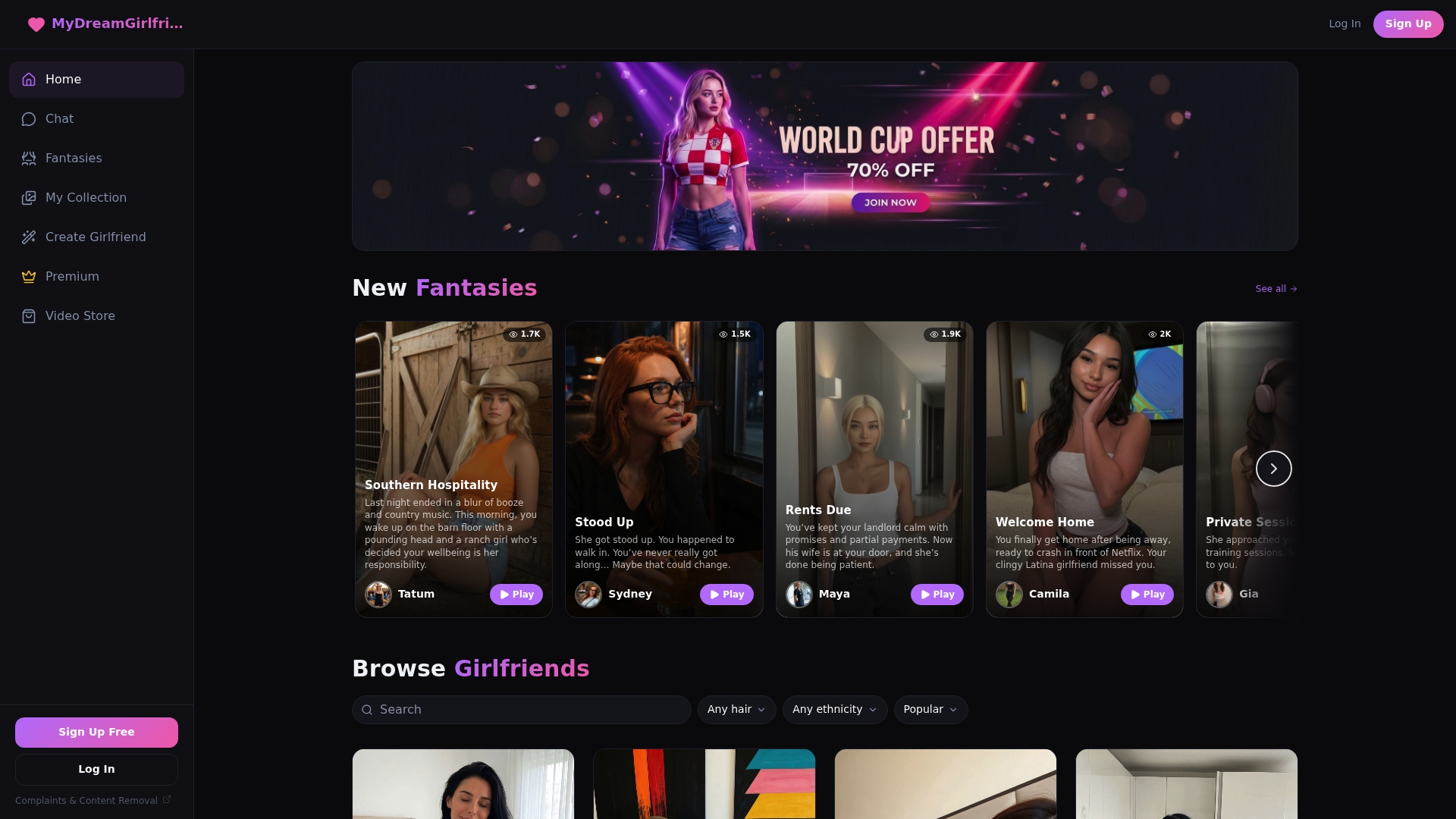
When you create her in the AI girlfriend creator, write your scene brief into her personality: how fast she moves, what she teases about and what stays off-limits. If you prefer to explore ready-made scenarios, browse the Her Rules or Private Session fantasies and set your intensity before you begin.
A short pre-scene checklist
Use this before any new roleplay:
- Pick the theme and the mood in one sentence.
- Name one limit (a topic or intensity level that is off the table).
- Choose your stop phrase and type it in the first message.
- Leave real-life identifying details out.
- Decide how long you will play, then check in at that point.
- Close the session deliberately, with a lighter message or a goodbye.
These six steps take under a minute. They cover the research themes above: content boundaries, privacy boundaries, and a clear way out.
FAQ
Can an AI actually consent to roleplay?
No, not in the way a person can. An AI does not have wants or the independent ability to refuse, so its “yes” is generated text. The consent that counts is yours: what you choose, your limits and your freedom to stop.
How do I set boundaries in an AI roleplay chat?
State them in your first message: theme, intensity, anything off-limits and a stop phrase such as “pause scene.” Restate them if the story drifts. You can also shape a companion’s personality up front so the baseline matches your preferences.
What should I do if a scene goes somewhere I do not like?
Use your stop phrase, step out of the story and ask for a plain conversation. Then redirect the scene, change the intensity or end the session. You do not need to explain or justify the change.
Is my intimate roleplay private?
Privacy depends on the platform and on your habits. Research shows people share very personal details as intimacy grows, so keep identifying information out of chats, secure your account and read the privacy policy before you share anything sensitive.
Is AI roleplay legal in the US?
Adults can use companion chat in general, but rules are developing, and states such as California are adding requirements for companion chatbot operators. Content involving minors or real, identifiable people in sexual scenarios is never acceptable.
Sources
- Can AI consent? Ethical considerations in human-AI intimate relationships (Technology.org)
- Negotiating Digital Identities with AI Companions (arXiv, CHI 2026)
- How AI Chatbots Are Designed: A Practical, Game-Design Style Guide
- The Quiet Contract and User Covenant
- “Death” of a Chatbot: Investigating and Designing Toward Closure (arXiv)
- Privacy in Human-AI Romantic Relationships (ACM CHI 2026)
- Tracing Users’ Privacy Concerns Across the Lifecycle of a Romantic AI Companion (arXiv)
- AI Companions: Community Reflections and Multistakeholder Recommendations (All Tech Is Human)
- AI companions information sheet (eSafety Commissioner, Australia)
- SB 243: Companion chatbots (California)
- The spread of AI companions and the challenges they generate (European Parliament)