
The fastest way into a boss employee roleplay scene is the performance review, the job interview, or the working late scenario, because each hands you a built-in reason for one person to give orders and the other to comply. None of it works without a sober negotiation beforehand and a safeword that both people agree to use, no exceptions. Everything below gives you the scripts, the setup, and the exact safety steps to run this well.
TL;DR:
- Proper negotiation and a mutually agreed safeword are essential for safe, ethical boss employee roleplay scenes, regardless of intensity.
- Use simple props like a blazer, notepad, or desk and focus on voice and posture to convey authority without costly costumes.
- Short scenes under fifteen minutes with clear opening actions help partners find their rhythm and confirm comfort with the dynamic.
- Explicit pre-scene discussion about limits, safewords, and check-in signals greatly reduces risks and builds trust during the roleplay.
- Practicing dialogue and tone with an AI companion can ease nervousness and improve in-scene confidence before engaging with a partner.
Table of Contents
- What Makes a Good Boss Employee Roleplay Scenario?
- Why Boss Employee Roleplay Turns People On
- How Do You Set Up an Office Roleplay Scene at Home?
- How Do You Negotiate Consent Before a Boss Employee Scene?
- Six Boss Employee Scene Blueprints
- Scripts You Can Copy and Adapt
- Creative Variations for Experienced Players
- Aftercare After Boss Employee Roleplay
- Why Consent Literacy Changes Everything About This Fantasy
- A Private Way to Explore Workplace Fantasies
- Sources
- FAQ
What Makes a Good Boss Employee Roleplay Scenario?
Six scenarios cover almost everyone who wants to try this dynamic, ranging from a light tease to a full authority-and-submission scene. Pick based on how much time you have and how intense you want the power gap to feel.
- The performance review — best for first timers; low intensity; requires a desk, a folder of “notes,” and a chair for the employee to sit across from.
- The job interview — best for a slow-burn power reveal; low to medium intensity; a resume printout and a formal outfit sell it fast.
- Working late — best for a claustrophobic, just-us-two mood; medium intensity; dim one lamp, close the blinds, and use a laptop as a prop.
- The disciplinary meeting — best for players who like guilt and tension; medium to high intensity; a “written warning” sheet works as a prop and a script anchor.
- The new manager — best for reversal play, since the “junior” boss has to prove authority; medium intensity; a name badge or lanyard sells the role fast.
- Boss and secretary — best for classic dictation and service dynamics; medium to high intensity; a notepad, pen, and a landline-style phone (or a muted cell) complete the set.
Every one of these scenes can flex up or down. Drop the disciplinary angle to medium and it becomes a stern check-in. Push the boss and secretary dynamic further and it becomes a full command-and-service scene. Swap the roles entirely, too. A submissive partner who normally plays the employee might enjoy running the disciplinary meeting from the boss chair once, just to feel the gradient from the other side. That reversal is often the single best diagnostic for whether a couple actually likes the power exchange or just likes one specific role in it.
Props matter less than commitment to voice and posture, which the setup section below covers in detail. A blazer over a t-shirt and a firm tone will outperform an expensive costume every time.
Why Boss Employee Roleplay Turns People On
Three things drive the appeal: the power gradient, the thrill of doing something a little forbidden, and how familiar the setting is. Almost everyone has sat across a desk from someone with more authority, felt their pulse tick up, and wondered what would happen if the tension in that room ever became something else. Roleplay lets you answer that question safely, inside a fiction both people built together.
The KINKSpec overview of boss and secretary roleplay frames this clearly: the entire charge comes from a negotiated fictional rank, not a real one. That distinction is the whole game. The boss in the scene has no actual authority over the employee’s job, paycheck, or career. Both partners built the hierarchy on purpose, and either one can end it in seconds.
That negotiated quality is also what keeps the fantasy ethical. Consent research is explicit that agreement in these dynamics needs to be handled with more care than a simple yes or no, especially when a power difference is part of the script. A review of consent norms in sexually diverse populations found that consent works best when it accounts for context and the specific relationship between the people involved, not a generic checklist. Boss employee scenes are a textbook case: the fictional boss says things that would be inappropriate or illegal from a real manager, so the agreement to fictionalize them has to be explicit, sober, and revisited any time either partner wants to change the scene.
Here’s the one rule that overrides everything else: never bring this dynamic into an actual workplace relationship, and never enact it on a real subordinate. The fantasy exists because both people know it’s fiction. The moment a real power imbalance (an actual manager, an actual employee, an actual paycheck on the line) enters the picture, it stops being roleplay and starts being misconduct.

How Do You Set Up an Office Roleplay Scene at Home?
You don’t need a home office or a costume budget. You need four things: a plausible prop or two, a private room, a posture shift, and a voice that commits to the role.
Props and costume, cheap version:
- A blazer, cardigan, or button-down shirt thrown over regular clothes signals “boss” instantly.
- Reading glasses (even non-prescription ones from a drugstore) add instant authority to any face.
- A notepad and pen turn anyone into a secretary taking dictation.
- A folder stuffed with any paper becomes “the file” or “the performance report.”
- A desk, kitchen table, or even a stack of books arranged like a desk gives the scene a spatial anchor.
- A lamp instead of overhead lighting sets a “working late” mood in under ten seconds.
Space and privacy checklist, before a single line of dialogue:
- Lock or block the door.
- Close blinds or curtains if the space has street-facing windows.
- Silence phones completely, not just on vibrate. A buzzing phone mid-scene kills immersion faster than almost anything else.
- Confirm nobody else (roommates, kids, deliveries) is expected for the scene’s duration.
Once the space is set, posture and voice do the heavy lifting that props can’t. A boss who sits up straight, speaks in short declarative sentences, and pauses before responding reads as authoritative even in sweatpants. An employee who keeps their eyes down, answers in shorter sentences, and asks permission before acting (“Should I close the door, sir?”) signals the power gap without needing a single costume piece.
Short, ritualized opening actions work better than long dialogue for getting into character fast. A guide to BDSM roleplay negotiation recommends a single concrete opening beat, like the boss gesturing to a chair or the employee knocking and waiting to be told to enter, because that small ritual shifts both people into role almost instantly.
Pro Tip: Keep your first attempt at any new scenario under fifteen minutes. Short scenes let you find your rhythm and figure out what you actually enjoy before you invest in longer, more elaborate versions.
How Do You Negotiate Consent Before a Boss Employee Scene?
Negotiation happens before the scene starts, fully out of character, in your normal voices, at a table or on a couch, not in bed and not half in role already. Collapsing negotiation into the opening minutes of the scene weakens it, because it gets tangled up with the fiction you’re trying to build.
Run through this checklist together, out loud, every time you try something new:
- Confirm who plays which role, and whether you want to swap next time.
- List hard limits (anything that’s off the table, no exceptions, no matter how the scene escalates).
- List soft limits (things you’re curious about but want to approach slowly, or only with a check-in first).
- Agree on a safeword system. The traffic-light model is the standard for a reason: “green” means keep going, “yellow” means slow down or check in, “red” means stop immediately, no questions asked.
- Cover health and safety basics, including any allergies, injuries, mobility limits, or STI/contraception status relevant to how far the scene might go.
- Decide how you’ll check in mid-scene without fully breaking the fiction, and agree on how to restart if you pause.
A review of BDSM consent literature points to exactly this kind of explicit, itemized negotiation as the model that reduces harm most reliably, and it’s worth borrowing even if your scene never touches anything the term “BDSM” typically covers. The MDPI guidance on consent and safety practices backs the traffic-light system specifically, noting that hard limits should be treated as non-negotiable, full stop, regardless of what happens in the moment.
One detail experienced players get right that beginners often miss: keep the safeword outside the fiction entirely. Don’t use “no” or “stop” as your safeword if your scene involves a boss character who might plausibly say those exact words in a stern voice. Pick something that would never come up naturally, like “pineapple” or “pause check.” That way, nobody has to guess whether “stop” was the character talking or a real request.
A sample negotiation might sound like this:
Off-role, sitting on the couch: “Okay, so I want to try the disciplinary meeting one. I’ll be the boss. Hard limit for me: no name-calling that references anything about my body. Soft limit: I want to try being told to stay after everyone else leaves, but let’s start gentle on that. Green means keep going, yellow means slow down, red means we stop and check in. Sound good?”
This matters more than most people assume going in. A 2024 survey found that roughly 25.56% of kink practitioners reported experiencing a consent violation at some point, which is exactly the kind of number that makes a five-minute negotiation conversation look like the cheapest insurance policy available.
Mid-scene, agree on a simple check-in gesture, like a hand squeeze or a tap on the shoulder twice, that either partner can use without fully dropping character. If someone calls yellow or red, stop the scene immediately, step out of role, and talk. Restarting is as simple as returning to the last comfortable beat once both people are ready.
Six Boss Employee Scene Blueprints
Each blueprint below gives you an opening beat, a place to escalate, a safe stop point, and a note on props. Use these as a skeleton, not a script you have to follow word for word.
The performance review
Opening beat: The employee sits across the desk while the boss flips through a folder, saying nothing for a few seconds before looking up.
Escalation points: The boss notes a specific area needing “improvement,” then shifts from professional criticism to a more personal, controlling tone. The employee starts out defensive, then compliant.
Safe stop point: Right after the initial criticism, before anything physical happens. This is the easiest scene to pause and restart.
Nonverbal cues: The boss taps a pen on the desk while thinking. The employee fidgets with their hands in their lap, eyes down.
Props: A folder, a pen, two chairs.
The job interview
Opening beat: The employee knocks, enters, and sits stiffly. The boss looks them over slowly before speaking.
Escalation points: Standard interview questions shift into more suggestive territory (“And what would you do to secure this position?”). The power reveal accelerates once the employee realizes what’s actually being asked.
Safe stop point: Anytime before the “offer” is extended. Ending the scene here still feels complete.
Nonverbal cues: The boss leans back, arms crossed, taking their time. The employee sits at the edge of the chair, hands folded.
Props: A resume, a formal outfit, a desk.
Working late
Opening beat: Everyone else has “gone home.” The boss calls the employee into the office to “finish one more thing.”
Escalation points: Work talk gives way to the boss commenting on how long they’ve both been staying late together, then to a more direct proposition.
Safe stop point: Right when the boss makes the first suggestive comment, before any physical contact.
Nonverbal cues: Dim lighting, the boss loosening a tie or top button, the employee glancing at the door.
Props: One lamp, a laptop, a closed door.
The disciplinary meeting
Opening beat: The boss opens with a written warning, reading it aloud in a flat, formal tone.
Escalation points: The tone shifts from procedural to personal. The boss offers an “alternative” to formal discipline. This is the scene most likely to involve mild degradation talk, so hard limits from the negotiation stage matter most here.
Safe stop point: After the warning is read, before the “alternative” is proposed.
Nonverbal cues: The boss stands while the employee remains seated, a classic dominance cue. The employee keeps their hands still, avoiding eye contact.
Props: A written warning sheet, a desk to stand behind.
The new manager
Opening beat: A younger or newer boss addresses a more experienced employee for the first time, visibly working to establish authority.
Escalation points: The employee tests the new boss’s authority (mild pushback, a challenging question), and the boss has to assert control convincingly. This one’s a natural fit for role reversal, since it’s already about someone proving they belong in charge.
Safe stop point: Right after the first authority test, before either character fully commits to the power dynamic.
Nonverbal cues: The new boss squares their shoulders, speaks slightly louder than necessary. The employee crosses their arms, initially skeptical.
Props: A name badge, a lanyard, or a “new office” prop like an unpacked box.
Boss and secretary roleplay
Opening beat: The boss buzzes the secretary in for dictation, notepad in hand.
Escalation points: Dictation gives way to the boss dictating something increasingly personal, or the secretary “misunderstanding” an instruction in a way that opens the scene up.
Safe stop point: Right after the dictation shifts tone, before any physical escalation.
Nonverbal cues: The secretary sits with notepad ready, pen poised. The boss dictates slowly, watching for a reaction.
Props: A notepad, a pen, a desk phone or muted cell phone as a prop.
On restraints: only introduce them once you’ve run a scene without them and both partners want more. Start with something reversible and low commitment, like a necktie loosely looped rather than locked cuffs, and always keep the safeword accessible. If a scene already carries a lot of emotional intensity (the disciplinary meeting, for instance), that’s not the moment to add a new physical element for the first time. Layer one new thing at a time.
Scripts You Can Copy and Adapt
Opening lines set the tone faster than any prop. Here are three per scene type to get you started, ready to say almost verbatim.
Performance review openers:
- “Sit down. We need to talk about your numbers this quarter.”
- “I’ve been reviewing your file. There are a few things I’m concerned about.”
- “Close the door behind you. This isn’t a conversation for the whole office.”
Job interview openers:
- “Your resume is impressive. Let’s see if you actually live up to it.”
- “I have a lot of candidates for this position. Convince me you’re the one.”
- “Tell me, what makes you think you’re right for this role?”
Boss and secretary openers:
- “Grab your notepad. I need you to take this down, word for word.”
- “You’ve been keeping me waiting. That’s not like you.”
- “Come in, and shut the door. This one’s confidential.”
Script one: the moderate performance review
Stage direction: employee enters, sits across the desk. Boss doesn’t look up immediately.
Boss: “Sit down. Your reports have been solid, but I want to talk about your attitude in meetings.”
Employee: “I didn’t realize that was an issue.”
Boss: “That’s exactly the problem. You don’t realize things until I point them out.” (leans forward) “I think you need someone paying closer attention to you.”
Employee: (quieter) “What did you have in mind?”
Boss: “Check ins. More frequent than the others get. Starting now.”
Safety remote: if either partner wants to slow down here, “yellow” pauses the scene for a check in without fully breaking role; “pineapple” stops it completely.
This version can end here, at a lingering, tension-filled standoff, or continue into physical territory depending on what you negotiated beforehand.
Script two: explicit femdom boss and secretary
Stage direction: secretary enters with notepad, stands (doesn’t sit unless told).
Boss: “You’re three minutes late.”
Secretary: “I’m sorry, it won’t happen again.”
Boss: “No, it won’t. Sit. Notepad ready.” (pause) “I want you paying full attention to me for the rest of this session. Not your phone, not the clock. Me.”
Secretary: “Yes. Understood.”
Boss: “Good girl. Now put the notepad down. I have a different kind of dictation in mind.”
Stage direction: pace shifts here; this is a natural checkpoint to confirm “green” before continuing further.
Boss: “On your knees. I’ll tell you exactly what I expect from you.”
Safety remote: “red” ends the scene immediately at any point; “yellow” signals slow down and check in without leaving the fiction entirely.
Adapt pronouns, titles (boss, manager, supervisor, director), and formality level to fit your dynamic. If you want a gentler version, cut the kneeling direction and end on the “good girl” line instead. If you want more intensity, extend the dictation into specific tasks or instructions negotiated in advance.
Creative Variations for Experienced Players
Once the basics feel comfortable, a few directions open up for more variety.
Femdom verbal technique relies on tone more than volume: short, clipped sentences, deliberate pauses, and withholding praise until it’s earned. Ritual elements, like requiring the employee to ask permission before speaking or sitting, deepen the power gradient without needing new props.
Role reversal works best when you treat it as a genuinely separate scene, not just flipped dialogue. The formerly submissive partner playing the boss needs the same posture and voice coaching the original boss got. Agree on an equalizing cue, something either partner can say if the reversal feels off, that resets the scene back to familiar territory.
Genre twists (a boss with a supernatural secret, a time-loop office, a “corporate cult” angle) can add novelty to a well-worn scenario, but they work best layered on top of solid basics rather than replacing them. If you’re drawn to consensual non-consent adjacent elements within the fantasy, negotiate that specifically and separately. It carries its own risk profile and needs its own hard limits conversation.
Light BDSM elements, restraints, sensation play, and light impact, fit naturally into the disciplinary and boss and secretary scenes. Introduce them gradually: test any new sensation on a low-risk area first, and agree on a single no-go list of high-risk actions before you start, exactly the way you’d handle hard limits in the original negotiation.
Aftercare After Boss Employee Roleplay
Aftercare starts the moment the scene ends, and it matters even for lighter scenarios that never got physical. Bodies and minds both need a few minutes to come down from an intensity spike.
- Get water and something warm (a blanket, a hoodie) within easy reach before the scene even starts.
- Check each other’s bodies for marks, soreness, or anything that needs attention.
- Hold each other or sit together quietly for a few minutes before talking about the scene itself.
- Ask directly: “How are you feeling? Was there anything you didn’t expect?”
- Circle back 24 to 72 hours later for a longer debrief once any adrenaline has fully settled.
If a boundary got crossed by accident, even a minor one, name it plainly rather than brushing past it. Say what happened, apologize without over explaining, and agree together on how to prevent it next time. That repair conversation, done calmly and without defensiveness, usually strengthens trust more than a scene that went perfectly ever could.
Why Consent Literacy Changes Everything About This Fantasy
Most people come to boss employee roleplay assuming the hard part is finding the right props or writing clever dialogue. It isn’t. The hard part is the five minutes before any of that, where you sit down and actually talk about limits, and most couples skip it because it feels awkward or unsexy.
That skip is the single biggest mistake I see in how this fantasy gets discussed online. Guides love to jump straight to scripts and costume tips, treating negotiation as a footnote instead of the foundation. It should be the opposite. A well-negotiated scene with mediocre dialogue beats a perfectly scripted scene with no negotiation, every time, because the thing that actually makes the fantasy hot is trust, not vocabulary.
There’s also a quieter benefit worth naming: rehearsing dialogue and tone before you’re both in the room can lower the stakes considerably. Reading through scripts together, or even practicing a scene’s opening beats with a private AI companion first, gives you a low-pressure way to find your voice before you commit to running it live with a partner.
If you take one thing from this guide, let it be this: the safeword conversation is not a mood killer. It’s the thing that makes everything after it possible.
— Pierce
A Private Way to Explore Workplace Fantasies
If you want to test out a boss employee dynamic before bringing it to a partner, or you’d simply rather keep the fantasy entirely private, Mydreamgirlfriend gives you a judgment-free space to do exactly that. The platform lets you build a fully customized AI companion (appearance, personality, voice) and run uncensored workplace roleplay scenarios on your own terms, with no scheduling, no scripts to memorize in advance, and no one else in the room.
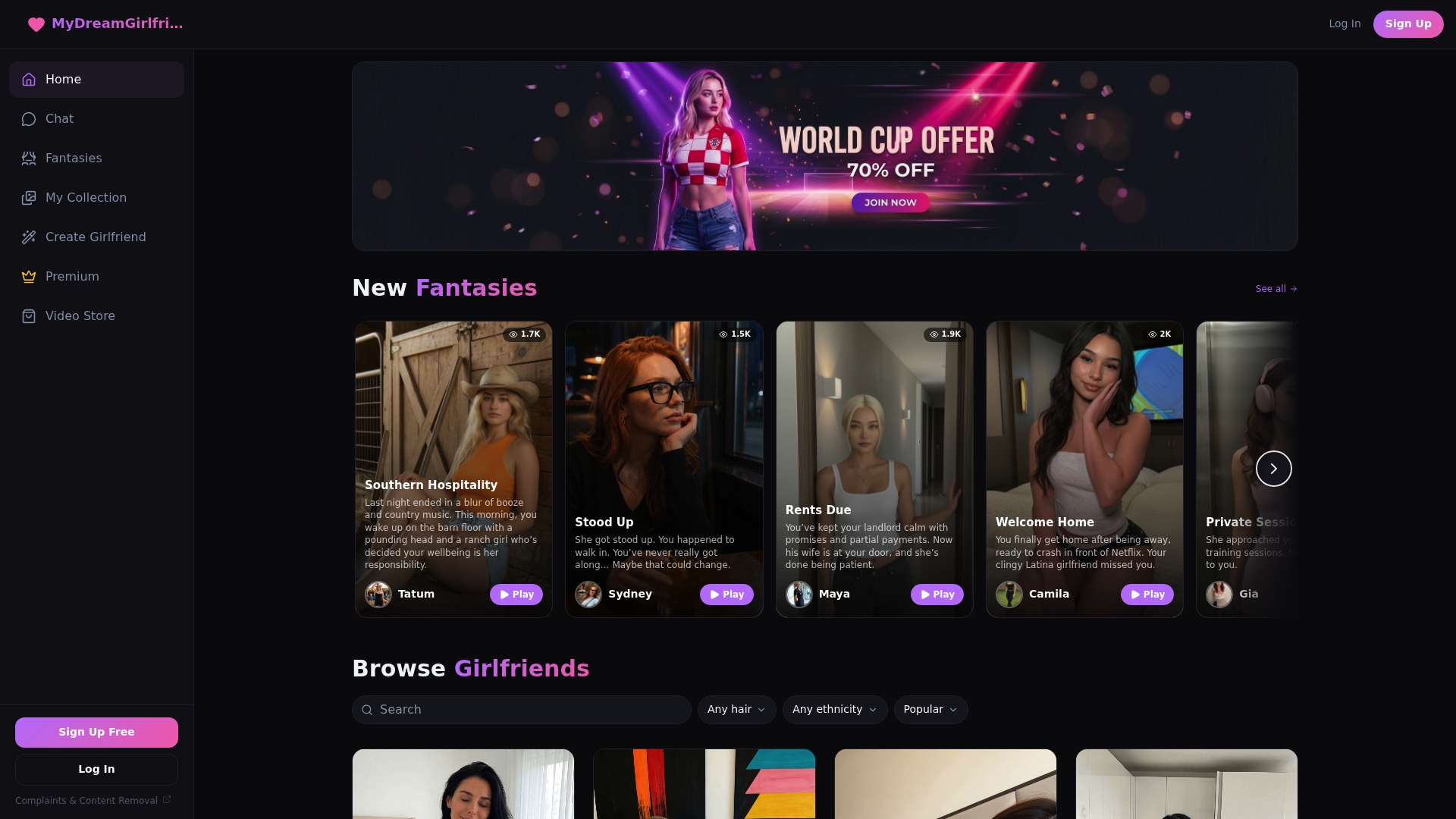
You can rehearse a performance review scene, try out a private session dynamic, or explore dialogue and pacing before deciding what you want to bring into a real partnership. The Premium plan runs $12.99 per month and unlocks extended roleplay and chat features, or you can start with the free plan to see how the customization and conversation actually feel. Either way, treat it as a supplement to real-world negotiation with a partner, not a replacement for it. Create your companion and try the boss employee dynamic on your own schedule tonight.
Sources
- Consent and safety guidance (MDPI)
- Sexual consent norms in a sexually diverse sample (PMC)
- Boss/Secretary roleplay overview (KINKSpec)
FAQ
What Do You Say to Start a Boss Employee Roleplay Scene?
Short, in-character declarative lines work best, like “Sit down, we need to talk about your numbers,” or “Close the door, this isn’t for the whole office.” Pick a line tied to your specific scenario (interview, review, working late) so it immediately signals the scene’s setting and tone.
Do You Need a Safeword for Boss Employee Roleplay?
Yes, always, even for lighter scenes that never turn explicit. The traffic-light system, green for keep going, yellow for slow down, red for stop, is the standard method, and the safeword itself should be a word that would never naturally come up in the scene’s dialogue.
How Long Should a First Boss Employee Scene Last?
Keep your first attempt short, under fifteen minutes, so you can find your rhythm without either partner feeling pressure to sustain a long scene. Short, ritualized opening beats get you into character fast, which matters more for a first try than scene length.
Can You Practice Boss Employee Roleplay Without a Partner?
Yes. A private AI companion platform like Mydreamgirlfriend lets you rehearse dialogue, pacing, and tone for workplace scenarios on your own before trying them with a partner, which can make the real negotiation conversation feel less daunting.
Is Boss Employee Roleplay Only for Couples Interested in BDSM?
No. The power exchange can stay light, a stern tone and a desk prop, with nothing resembling kink at all. The same negotiation and safeword principles still apply, since any scripted power imbalance benefits from clear limits agreed on beforehand.