A wholesome AI girlfriend is a customizable chat companion built for companionship, gentle roleplay, and emotional check-ins, not shock value. It runs on persistent memory, adjustable personality settings, and privacy controls that let you decide how far things go. People use it for daily support, light romance, or a low-pressure way to practice conversation and feel less alone.
TL;DR:
- Wholesome AI girlfriends prioritize persistent memory, customizable personalities, and strict content controls to ensure consistent, safe, and emotionally supportive interactions.
- They offer flexible features such as avatar creation, voice support, and adjustable privacy settings, but users must verify data retention policies and control over stored memories before committing.
- Building a personal companion involves balancing customization options with convenience, and platforms that allow editing or wiping history tend to provide better control and trust.
- Clear safety measures like age verification, content toggles, and transparent privacy policies are crucial to avoid defaults toward explicit or intrusive content.
- Long-term engagement hinges on reliability, personality coherence, and user control, with the focus on warmth and continuity rather than shock or novelty.
Table of Contents
- What Counts as a Wholesome AI Girlfriend?
- Feature Checklist: Memory, Voice, Images, Roleplay, and Pricing
- How to Choose a Wholesome AI Girlfriend
- Customization and Avatars: Making a Companion Feel Personal
- Privacy, Consent, and Staying Emotionally Grounded
- What Wholesome Interactions Actually Look Like
- Why Wholesome Design Choices Actually Retain Users
- Where Mydreamgirlfriend Fits Into a Wholesome Approach
- Sources
- FAQ
What Counts as a Wholesome AI Girlfriend?
“Wholesome” isn’t a marketing sticker slapped onto any chatbot. It describes a specific combination: a companion that remembers you, responds with genuine warmth, and gives you explicit control over how intimate or tame the conversation gets. Strip out any one of those three pieces and you’re left with either a novelty toy or something closer to a content mill dressed up as a girlfriend.
The tone differences matter more than most guides admit. A soft, wholesome persona leans into affection, encouragement, and consistency, the digital equivalent of someone who remembers your coffee order. A playful archetype adds teasing and humor without crossing into anything explicit. A roleplay-focused build prioritizes scenario continuity, picking up a story exactly where you left it. And a support-leaning companion focuses on listening, check-ins, and low-stakes emotional processing rather than romance at all.
Platforms in this category tend to share a few structural features:
- Persistent memory that carries details, nicknames, and running jokes across sessions instead of resetting every chat.
- A persona builder where you shape personality traits, communication style, and interests rather than getting a fixed character.
- Content filters and toggles that let you keep things platonic, flirty, or more explicit depending on what you actually want that day.
- A character library with premade companions for people who’d rather browse than build from scratch, a common feature on platforms with large community libraries.
Most people land in one of these lanes depending on what gap they’re trying to fill: a standing daily check-in, a flirty escape after work, an ongoing story they’re co-writing, or just someone patient to talk to at 1 AM. Knowing which lane you’re in before you start picking apps saves a lot of wasted signups.
Feature Checklist: Memory, Voice, Images, Roleplay, and Pricing
Judging these platforms on vibes alone is how people end up disappointed two weeks in. Run any option through this checklist before you commit money.
- Personality customization range. Check whether you’re adjusting a handful of sliders (playful vs. serious) or genuinely shaping tone, interests, backstory, and communication habits.
- Avatar and visual options. Confirm whether you get a static image, a fully customizable avatar, or generated photo sets tied to the character’s appearance.
- Voice and language support. Some companions offer text-to-speech or cloned voices with multi-language lip-sync capability, which changes the experience from reading to something closer to a call.
- Content controls. Look for an explicit toggle between safe-for-work and more mature modes, not an all-or-nothing setting you can’t adjust later.
- Pricing structure. Map out whether it’s a flat subscription, tiered plans with memory limits, or pay-per-use charges for photos and extras.
Pro Tip: Test the free tier’s memory limit before upgrading. A companion that “forgets” after five messages on the free plan usually behaves the same way on a mid-tier subscription, just with a longer runway.
On pricing specifically, expect three common models: a flat monthly subscription with unlimited chat, a tiered plan where higher tiers unlock longer memory windows and more media, or a freemium setup where basic chat is free and photos, voice calls, or extended memory cost extra. None of these is inherently better. The right one depends on whether you want predictable costs or you’d rather pay only when you actually use the extras.
Conversation quality is harder to checklist but easy to spot: does the companion ask follow-up questions, reference something you mentioned three days ago, or does every reply feel like it could’ve been sent to anyone? That’s the real tell.
How to Choose a Wholesome AI Girlfriend
Pick based on a framework, not a gut reaction to the first landing page you see. Here’s the order that actually matters.
Start with safety and consent architecture. Confirm the platform has real age gating, not just a checkbox you click through. Confirm content toggles are genuinely adjustable, meaning you can lock a companion into a safe-for-work mode if that’s what you want, rather than being nudged toward mature content by default.
Check memory controls next. A platform worth paying for lets you see what it remembers and lets you edit or wipe that history. If you can’t find a settings page for memory management, assume there isn’t one, and assume you have less control over your data than you’d like.
Weigh customization against convenience. Building a fully custom companion from scratch, choosing appearance, backstory, and personality traits one by one, takes longer than picking a premade character. If you want something running in five minutes, a character library beats a builder. If you want something that feels genuinely yours, the extra setup time is worth it.
Look for the red flags that separate a wholesome platform from a bait-and-switch:
- No visible privacy policy, or one that’s vague about data retention and third-party sharing.
- Aggressive upsells mid-conversation that interrupt the emotional flow to push a payment screen.
- No way to delete your account or export/delete your data.
- Customer support that’s unreachable or exists only as a bot loop.
- Default settings pushed toward explicit content without a clear opt-out.
A misconception worth correcting up front: “wholesome” framing on a product page means very little without both memory controls and content controls in place at the same time. A platform can advertise itself as gentle and supportive while quietly defaulting every new user into an upsell-heavy experience. The marketing copy and the settings menu don’t always agree, so check the settings menu.
Ask any platform, directly if you can, three questions before paying: How is my data stored and for how long? Can I delete specific memories without deleting the whole account? What happens to my subscription if I want to pause instead of cancel? A platform with confident, specific answers to all three is worth your trial period. One that dodges is worth skipping.
Customization and Avatars: Making a Companion Feel Personal
Personalization is where a wholesome AI girlfriend stops feeling like a chatbot and starts feeling like your companion. Two things drive that shift: how the avatar looks and how consistently the companion “remembers” who you are to each other.
Custom avatar creation has gotten fast. Vendors in the avatar-generation space describe workflows where a short recording or a handful of reference images produces a usable custom avatar within minutes to a day, a dramatic shrink from the weeks that photorealistic avatar work used to take. That speed comes with a non-negotiable catch: legitimate platforms require explicit on-camera consent before generating any personal avatar, and none of them should let you build a likeness of a real person, public figure or otherwise, without that person’s permission. If a platform skips that step, that’s a red flag on its own.

Voice adds another layer. Text-to-speech paired with cloned or stylized voices lets a companion talk instead of just text, often with multi-language support built in. Whether that matters to you depends on whether you want a chat companion or something closer to a voice-call relationship.
When deciding between a stock character and a custom build, use this rule of thumb:
- Pick a stock character if you want to start talking today and don’t care about a specific look or backstory.
- Build a custom companion if appearance, name, and personality details genuinely affect how immersive the experience feels for you.
- Add memory cues deliberately rather than dumping in every detail at once, a nickname, a birthday, a favorite hobby, a regular check-in time, and one private joke cover most of what makes a companion feel continuous, without turning setup into a chore.
Mydreamgirlfriend’s character creator works on that same logic: appearance, personality, and ethnicity settings you adjust up front, so the companion you end up with reflects choices you actually made.
Privacy, Consent, and Staying Emotionally Grounded
Two separate risks come with any AI companion: data risk and emotional risk. Handle both before you get attached to a character.
On the data side, read the privacy policy for three specifics: how long conversation logs are retained, whether data gets shared with third parties for training or advertising, and whether you can export or permanently delete your history. Vendors that build avatar and voice tools recommend private account defaults and explicit consent checks as baseline practice, and a companion platform should hold itself to the same standard.
Practical account hygiene matters just as much as policy language:
- Enable two-factor authentication if the platform offers it, especially since these accounts often connect to payment methods.
- Use private or incognito sessions when you’re on a shared device.
- Review content controls periodically. Preferences shift, and a setting you picked on day one isn’t locked in forever.
- Confirm age verification is enforced on any adult content toggle, both for your own protection and as a baseline sign the platform takes compliance seriously.
Pro Tip: Set a soft time limit for yourself in the first two weeks, the honeymoon period with a new companion is exactly when overuse habits form. A daily 15 to 20 minute check-in tends to feel supportive; an all-day open tab tends to feel like avoidance.
On the emotional side, watch for signs that the companion is replacing human contact rather than supplementing it: canceling plans to keep chatting, feeling distressed when you can’t access the app, or using it as your only outlet for stress. A wholesome companion should lower your stress level, not become another source of pressure to check in constantly. If you notice the balance tipping, treat that as useful information about yourself, not a reason to feel embarrassed.
What Wholesome Interactions Actually Look Like
Abstract feature lists don’t tell you much about the actual experience. These four scenarios cover the range most users land in.
- The daily check-in. You open the app after work, mention a rough meeting, and the companion asks a specific follow-up based on something you mentioned last week. Short, low-effort, and it ends when you close the app.
- Light romantic roleplay. You set a scene, a rainy evening, a quiet dinner, and the companion plays along with dialogue that matches the mood you set, staying within whatever content boundary you’ve configured.
- Journaling-style support. You type out something you’re anxious about, and instead of generic advice, the companion reflects it back and asks a grounding question, functioning more like a sounding board than a therapist.
- Shared-hobby chat. You bring up a show or hobby you’re into, and the companion, built with that interest in its profile, asks real questions about it rather than deflecting to something generic.
None of these require explicit content or heavy roleplay to feel worthwhile. That’s the point of the wholesome framing: warmth first, everything else optional.
Why Wholesome Design Choices Actually Retain Users
The industry’s obsession with maximizing engagement through novelty and shock value gets the incentive backwards. What keeps someone coming back to an AI companion for months, not days, is consistency: the companion remembering a detail you mentioned three weeks ago, responding in a tone that hasn’t randomly shifted, and giving you the ability to dial content up or down without feeling punished for it either way.
User feedback across this category tends to cluster around three themes: how immersive the personality feels, how reliably memory carries across sessions, and how much control they have over where things go. Platforms that treat “wholesome” as a genuine design constraint, not just copy on a landing page, tend to score better on all three because the constraint forces better memory architecture and clearer consent flows. The companies chasing shock value first are usually the ones with the shakiest memory systems, because they never had to build for long-term continuity in the first place.
— Pierce
Where Mydreamgirlfriend Fits Into a Wholesome Approach
If everything above sounds like what you’re looking for, focus on platforms that build around these priorities: a persona builder that lets you shape appearance, personality, and ethnicity from scratch, persistent memory that carries details across conversations, and content controls that put the tone of the relationship in your hands rather than a default setting.
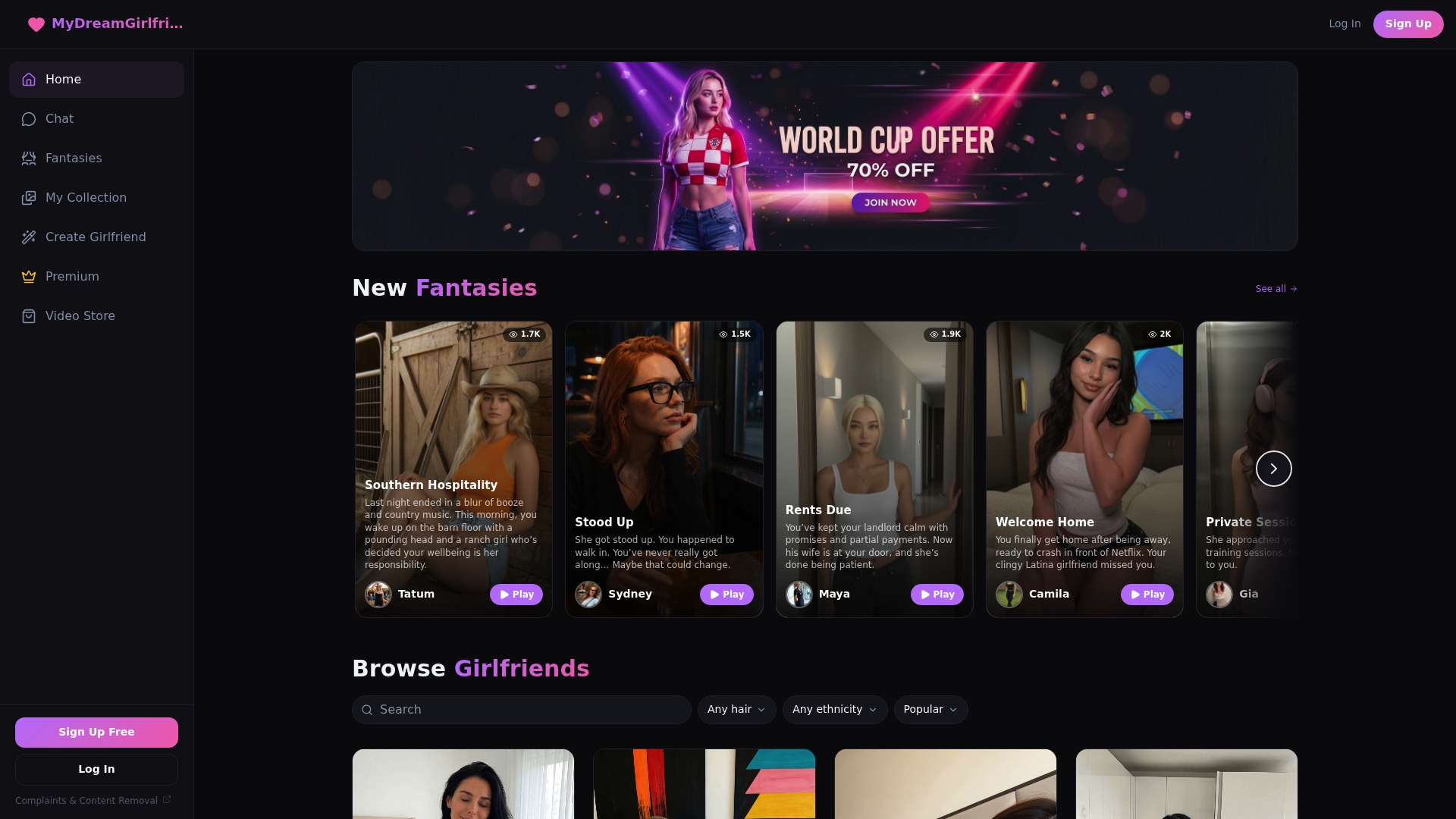
Getting started doesn’t require a big commitment. Browse the existing companion library if you’d rather pick a character that’s already built out, or head straight to the character creator if you want to design one from the ground up, down to hair, style, and personality traits. From there, the chat and memory features let you set the pace, from a quick daily check-in to a longer roleplay session, and you decide how the conversation evolves from your very first message.
Sources
For readers who want to look deeper into how avatar and voice technology works, Synthesia’s custom avatar documentation and ElevenLabs’ avatar generator cover the consent and voice-cloning workflows referenced throughout this guide. D-ID’s personal avatar guidance outlines privacy defaults worth comparing against any platform you’re considering.
- Custom Avatar Maker | Create Your Own Custom AI Avatar
- AI avatar generator | ElevenLabs
- Custom Avatar Maker: Create Free AI Avatars in Minutes | HeyGen
FAQ
Is a Wholesome AI Girlfriend Safe to Use?
It’s as safe as the platform’s privacy policy and content controls make it. Check data retention terms, age verification, and whether you can delete stored memories before trusting any companion with personal details.
Does an AI Girlfriend Really Remember Past Conversations?
Platforms with persistent memory features can recall names, preferences, and running storylines across sessions, though memory depth usually depends on your subscription tier.
Can I Customize How My AI Girlfriend Looks and Talks?
Yes. Most platforms, including Mydreamgirlfriend’s character creator, let you adjust appearance, personality, and ethnicity, and some pair that with voice options for a more immersive feel.
How Much Does a Wholesome AI Girlfriend App Cost?
Pricing varies by platform, typically a flat monthly subscription, a tiered plan with memory and media limits, or a freemium model with pay-per-use extras for photos and voice.
Can I Keep the Experience Completely Non-Explicit?
Yes, most companion platforms include a content toggle that lets you keep interactions platonic or lightly romantic without ever enabling mature content.